
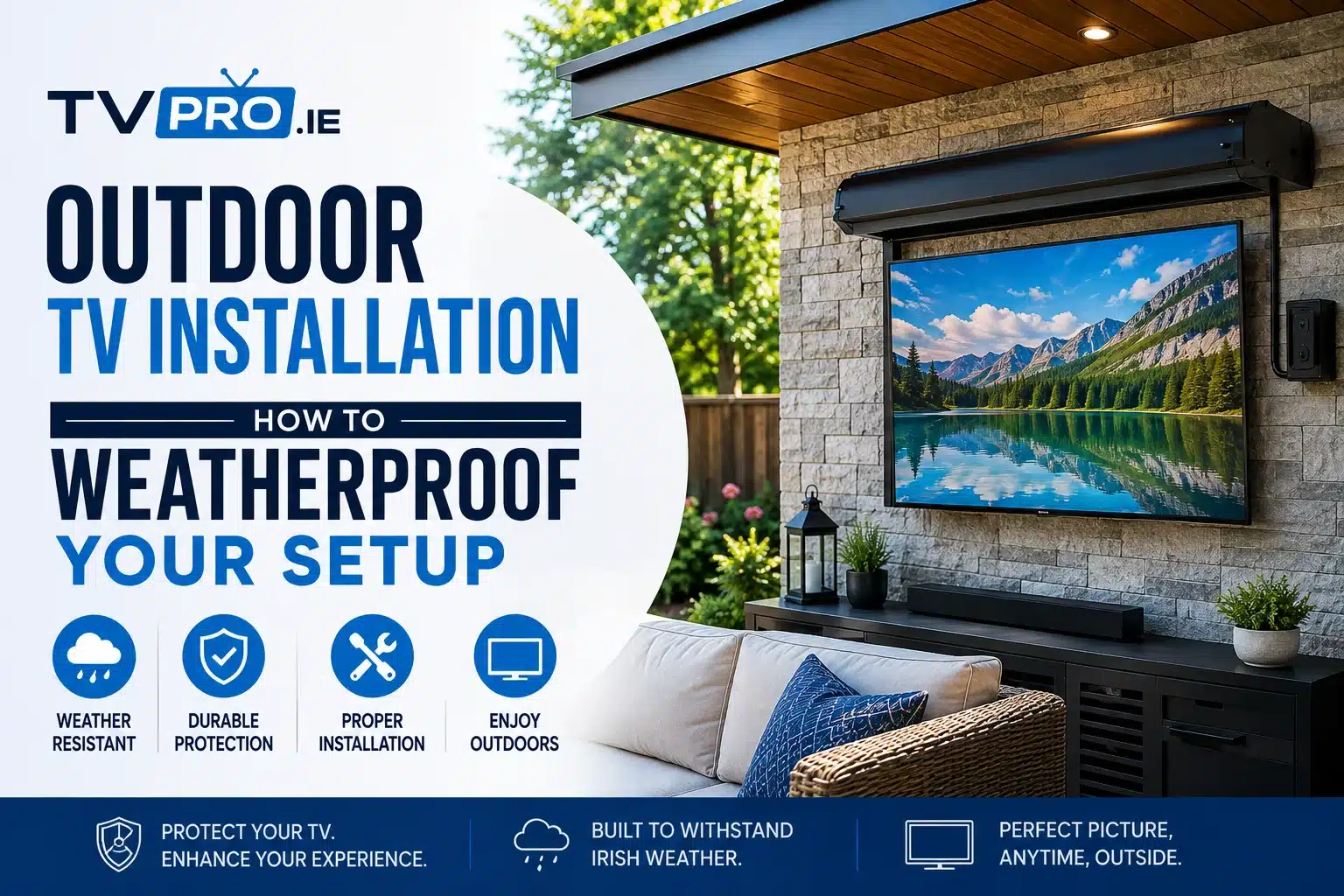
As we know, outdoor activities are already limited nowadays. We mostly forget to breathe fresh air or enjoy something with friends and family. While enjoying your favorite shows and movie nights with friends and family, upgrading your setup and installing a TV outdoors is a great way to entertain yourself in an open living space.
A TV is an electronic device that is designed for a climate-controlled living room so the idea of placing it outdoors could be the biggest challenge due to moisture, extreme temperatures, sunlight, and dust. These factors can reduce the life of a TV or even create safety hazards.
So the question is how to ensure a weatherproof setup that is reliable and lasts for years. We are going to discuss all the possible executions that you need to know for a safe, durable, and high-performing outdoor TV installation.
1. Choose the Right Display – Purpose-Built vs. Enclosed Indoor TV
The first major thing that needs to be considered before installation is the decision of the type of TV that perfectly suits your space and budget.
Option A: Weatherproof Outdoor TVs
With other advancements, you can also find purpose-built outdoor TVs from different brands that are specifically designed for the outdoor environment.
- Pros: they are made with strong painted aluminum boxes, with the feature of temperature control and non-reflective glass, along with a bright screen to beat the sunlight.
- Cons: their prices are comparatively higher than indoor TVs.
Option B: Indoor TV in a Weatherproof Enclosure
If you want a budget-friendly TV designed for indoor living rooms to place it outdoors, then you will have to keep it in a strong weatherproof box.
- Pros: It will not drain your wallet and is also a convenient option if you want to upgrade the TV in the future.
- Cons: The box will take up more space and the glass on the box may cause glare and reflection as simple glass is not able to reduce them.
Safety Tip: Do not place a normal indoor TV outside without any safety or box as environmental changes can cause serious damage or break the parts over time.
- Strategic Placement – Protection Begins with Location
The best and easiest way for a weatherproof setup is to select an area where you know the rain, sunlight, and wind can’t easily reach.
You should firstly place it under the roof so rain can’t damage the wires and plugs and it will last for years. You definitely do not want to waste your investments. Going ahead with this step is extremely crucial.
Direct sunlight can damage the screen and affect the display by overheating so prioritize facing the TV north or east to avoid the hottest afternoon sun
You must also prefer to avoid dusty pathways, areas or salty sea air unless you have a good barrier to protect it.
3. Selecting Weatherproof Mounts & Hardware
Always choose the best stainless steel bracket for walls as normal steel wall brackets have a chance of quick rust, damage, and might leave stains on your walls once they get wet.
- Material Selection: It is important to select high-grade stainless steel brackets or paint the normal ones with tough outdoor paint to make them long-lasting.
- Structural Anchoring: Make sure to attach it to solid parts of the wall.
- Movement Control: By using full-motion outdoor brackets you can easily move the TV during the day or adjust the angle to keep it safe from the sunlight, so it is one of the best ways to make it last longer.
4. Electrical Safety & Cable Management
Strict Safety is required in outdoor installation as you are mixing electricity and moisture so here is a step-by-step safety guide to do it safely.
Start with a safe outdoor wall outlet:
Never use regular indoor outlets for outdoor use as it is not safe and always prefer a protected outlet that is specially installed by professionals to keep it safe from weather.
GFCI Protection is a Must:
The outlet must have GFCI protection. It is a device that instantly cuts off power when a small amount of electricity is leaking out to protect you from electric shock.
Use a Weatherproof In-Use Cover:
Even if you have GFCI protection your outlet needs a weatherproof cover. Keep in mind that it is not an ordinary cover but an “ In-use” cover. You can cover the plugs while they are plugged in to keep them safe from dust and rain.
Choose Outdoor Rated Cables:
As you have to be careful about everything for an outdoor setup, you need outdoor-rated cables that are either
Safe to bury underground
UV-resistant so they won’t crack or be damaged by sunlight.
These cables are designed for tough outdoor weather conditions to handle heat and moisture.
Create a Drip Loop:
Before the power cables go into your TV, leave a small U-shaped bend in the cable, it will act like an umbrella for your cable as it catches the water and lets it fall away safely.
5. Thermal Management & Ventilation
When the temperature is extreme it definitely poses a threat to the outdoor electronics. High heat can easily cause screens to black out, while freezing conditions can crack the internal solder joints or sometimes also damage the LCD fluids.
You must ensure that the enclosure or the surrounding mounting space has complete ventilation to dissipate the heat that is being generated by the TV itself.
Not only that but you should also take care of active cooling which means a high-end outdoor setup should use controlled fans inside the enclosures to take the hot air out with the internal temperature not going anywhere above 29°C.
In the freezing environment, specialized internal heating elements are extremely helpful in preventing internal moisture condensation during cold-weather startups.
6. Weatherproof Protective Covers & Daily Maintenance
Even if you think your setup is completely shielded under a roof or inside a weatherproof enclosure, there are some daily habits that you should focus on because they play a huge role in long-term longevity.
You should try to use heavy-duty soft covers because when the TV is not being used it can easily be protected with a breathable and waterproof fabric cover fitted with extremely soft interior lining. This is going to prevent micro-scratches, insects and also shield against blowing dust.
You should never spray the liquid cleaners onto the outdoor screen directly. You should dust the unit with a really soft microfiber cloth and you should then clean with diluted and screensafe solutions that are applied to the cloth first.
If you live in an area that has extremely harsh winter conditions, you should consider mounting the TV for extended -0 months and storing it indoors to keep it protected.
continue reading
Related Posts

When you’re spending your money on getting a premium TV,
TV installation has become an important part of modern home
Bringing a TV into your home used to be simple