
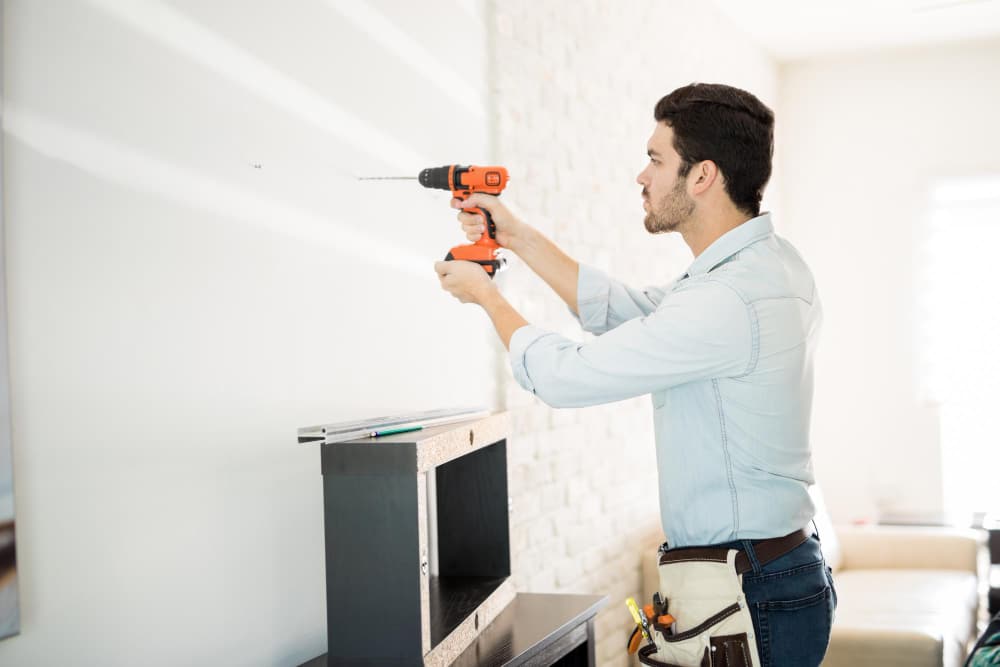
Bringing a TV into your home used to be simple you placed it on a stand, plugged it in, and that was it. But things have changed. Today, TV wall installation has become the preferred choice for homeowners who want a cleaner, more modern look and a better viewing experience.
If you’re here, you’re probably thinking about mounting your TV, or maybe you’ve already tried and realized it’s not as straightforward as it looks.
And that’s true.
Mounting a TV is one of those things that seems easy until you actually start doing it. Then questions pop up quickly:
Where should it go?
How high is too high?
What if the wall can’t support it?
How do you hide all those wires?
This guide answers all of that, clearly, practically, and without overcomplicating things. By the time you finish reading, you’ll know exactly how to approach TV wall installation the right way, whether you do it yourself or hire a professional.
Why TV Wall Installation Is Worth It
There’s a reason more people are choosing wall-mounted TVs over traditional setups.
First, there’s the obvious benefit: space. When you mount your TV, you free up floor area. This makes even smaller rooms feel more open and less cluttered.
But the real value goes beyond space-saving.
A properly mounted TV creates a sense of structure in the room. Instead of the TV feeling like a temporary object sitting on furniture, it becomes part of the design. The wall looks intentional. The setup feels complete.
Then there’s the viewing experience. When your TV is positioned correctly on the wall, you’re not adjusting your posture or shifting around to get comfortable. The screen sits where your eyes naturally fall.
And finally, safety. A wall-mounted TV is much harder to tip over, which is especially important in homes with children.
So while it may seem like a small upgrade, TV wall installation actually improves both how your space looks and how it functions.
Understanding Your Wall Before You Even Think About Mounting
One of the biggest mistakes people make is skipping this step. Not all walls are the same, and the success of your TV installation depends heavily on what’s behind the surface. In most homes, you’ll encounter one of three types: drywall, concrete, or brick.
Drywall is common in modern construction, but it’s not strong enough on its own to support a TV. The real support comes from studs hidden behind it. These are vertical beams, usually wood or metal, that carry the weight. If you mount your TV directly into drywall without hitting a stud, it might hold temporarily, but it won’t stay secure long-term.
Concrete and brick walls are stronger, but they require a different approach. You’ll need proper anchors and tools designed specifically for these materials. Drilling into them isn’t difficult, but it does require precision.
Understanding your wall type isn’t just a technical step; it’s the foundation of a safe installation.
Choosing the Right TV Mount (This Decision Matters More Than You Think)
Not all TV mounts are created equal, and the one you choose will affect your daily experience more than you might expect. Some people go for the simplest option: a fixed mount. It keeps the TV flat against the wall and looks clean and minimal. If your seating position is directly in front of the screen, this works perfectly.
But if your setup isn’t perfectly centered, or if the TV is mounted slightly higher than eye level, a tilting mount gives you more flexibility. You can angle the screen downward, which makes viewing more comfortable.
Then there are full-motion mounts. These allow you to pull the TV away from the wall, swivel it, and adjust it based on where you’re sitting. They’re ideal for larger rooms or spaces where the viewing angle changes.
However, they also require more careful installation because they put additional stress on the wall. The right mount depends on your room, your habits, and how you actually use your TV, not just how it looks when it’s turned off.
The Biggest Mistake – Mounting the TV Too High
This happens more often than you’d think. A lot of people mount their TV based on how it looks when they’re standing. The result? A screen that’s too high when they sit down.
At first, it might seem fine. But over time, you’ll notice it. Your neck starts to strain. Watching TV becomes slightly uncomfortable. It’s not dramatic, but it’s enough to matter.
The ideal position is simple: the center of the screen should be roughly at eye level when you’re seated. That doesn’t mean there’s one perfect measurement for every home. It depends on your furniture and how you sit. But the principle stays the same: your comfort should guide the placement, not just aesthetics.
Planning the Installation (Before You Drill Anything)
Good TV wall installation isn’t about reacting in the moment; it’s about planning. Before you drill a single hole, you should already know:
- Exactly where the TV will go
- The height and alignment
- Where the cables will run
- Where is your power source
This step saves you from making adjustments later, which are often harder and messier to fix.
A simple trick is to use painter’s tape to outline the TV on the wall. Step back, sit down, and look at it from your usual viewing position. This gives you a realistic preview before committing.
Planning may feel like an extra step, but it’s what separates a clean, professional-looking setup from one that feels slightly off.
Cable Management – The Detail That Defines the Final Look
You can mount your TV perfectly, but if cables are hanging down, it ruins the entire setup. This is why cable management isn’t optional; it’s part of the installation. There are a few ways to handle it.
Some people choose to run cables inside the wall for a completely clean look. This is the most seamless option but requires careful handling and, in some cases, professional help.
Others use cable covers that stick to the wall and can be painted to match. It’s a simpler solution and still looks neat if done properly.
Then there are custom panels or media walls that hide everything behind a designed surface.
The method you choose depends on your budget and how permanent you want the setup to be. But the goal is always the same: clean lines, no visible clutter.
DIY vs Hiring a Professional
At this stage, most people ask themselves whether they should do it themselves or call someone. The honest answer is: it depends.
If you’re comfortable with tools, have a clear plan, and your setup is straightforward, DIY can work well. Many people successfully mount their TVs on their own.
But if your wall is complicated, your TV is large, or you want hidden wiring, hiring a professional can save time and prevent mistakes.
Professionals bring experience. They know how to handle different wall types, ensure proper alignment, and deal with unexpected issues. There’s no right or wrong choice here, just what works best for your situation.
Safety Comes First (Always)
A mounted TV should feel completely secure. There shouldn’t be any movement, wobbling, or uncertainty. If something doesn’t feel right, it probably isn’t.
TVs are heavy, and a poorly installed mount can fail over time. That’s not something you want to risk. Using the correct screws, anchors, and mounting points is essential. Cutting corners here might save a few minutes, but it can lead to serious problems later.
If you have children at home, this becomes even more important. A properly mounted TV is safer than one on a stand, but only if it’s installed correctly.
Common Mistakes People Realize Too Late
Most installation issues don’t show up immediately; they become obvious after a few days or weeks. One of the most common mistakes is poor alignment. Even a slightly tilted TV is noticeable, especially in a modern setup.
Another issue is ignoring cable management until the end. By then, it’s harder to fix without redoing parts of the installation.
Using the wrong mount or hardware is another problem. Not all mounts are suitable for all TVs or walls, and assuming they are can lead to instability.
And of course, mounting too high, something many people regret once they start actually watching TV. These mistakes are avoidable, but only if you think through the process before starting.
Designing a TV Wall That Actually Looks Good
Once the installation is done, the wall itself becomes a focal point. This is where you can go beyond functionality and think about design. Some people prefer a simple, clean look with just the TV. Others add floating shelves, decorative panels, or subtle lighting.
Even small touches can make a big difference. Soft backlighting behind the TV, for example, not only looks good but also reduces eye strain in darker rooms.
The key is balance. You don’t want to overcrowd the wall, but you also don’t want it to feel empty. A well-designed TV wall doesn’t just hold a screen; it enhances the entire room.
FAQs
What is TV wall installation?
TV wall installation is the process of securely mounting a television onto a wall using a bracket or mount. It improves space utilization, enhances viewing comfort, and creates a cleaner, more modern look compared to placing a TV on a stand.
How high should a TV be mounted on the wall?
A TV should be mounted so that the center of the screen is at eye level when you are seated. This ensures comfortable viewing and reduces neck strain over long periods.
Can I mount a TV on any wall?
Not every wall is suitable without proper preparation. Drywall requires mounting into studs for support, while concrete and brick walls need appropriate anchors. Understanding your wall type is essential for a safe installation.
Do I need a professional for TV wall installation?
You don’t always need a professional if you have the right tools and knowledge. However, for larger TVs, complex walls, or hidden cable setups, hiring a professional ensures better safety and results.
How do I hide wires after mounting a TV?
Wires can be hidden by running them inside the wall, using cable covers, or installing a custom panel. The best method depends on your wall type and the level of cleanliness you want in the final look.
What is the best type of TV wall mount?
The best mount depends on your needs. Fixed mounts are simple and clean, tilting mounts improve viewing angles, and full-motion mounts offer flexibility for different seating positions.
Is wall mounting a TV safe?
Yes, wall-mounting a TV is safe when done correctly with proper hardware and installation methods. It can be safer than using a stand, especially in homes with children.
Why does my mounted TV look uneven?
An uneven TV is usually caused by incorrect leveling during installation or improper mounting alignment. Using a level tool during installation helps avoid this issue.
Final Thoughts
TV wall installation isn’t just about mounting a screen; it’s about improving how your space feels and functions. When done right, everything comes together. The room looks cleaner. The viewing experience improves. The setup feels intentional. It’s a simple upgrade, but one that makes a lasting difference. And the best part? Once it’s done properly, you won’t have to think about it again; you’ll just enjoy it.
continue reading
Related Posts
As we know, outdoor activities are already limited nowadays. We
When you’re spending your money on getting a premium TV,
TV installation has become an important part of modern home