
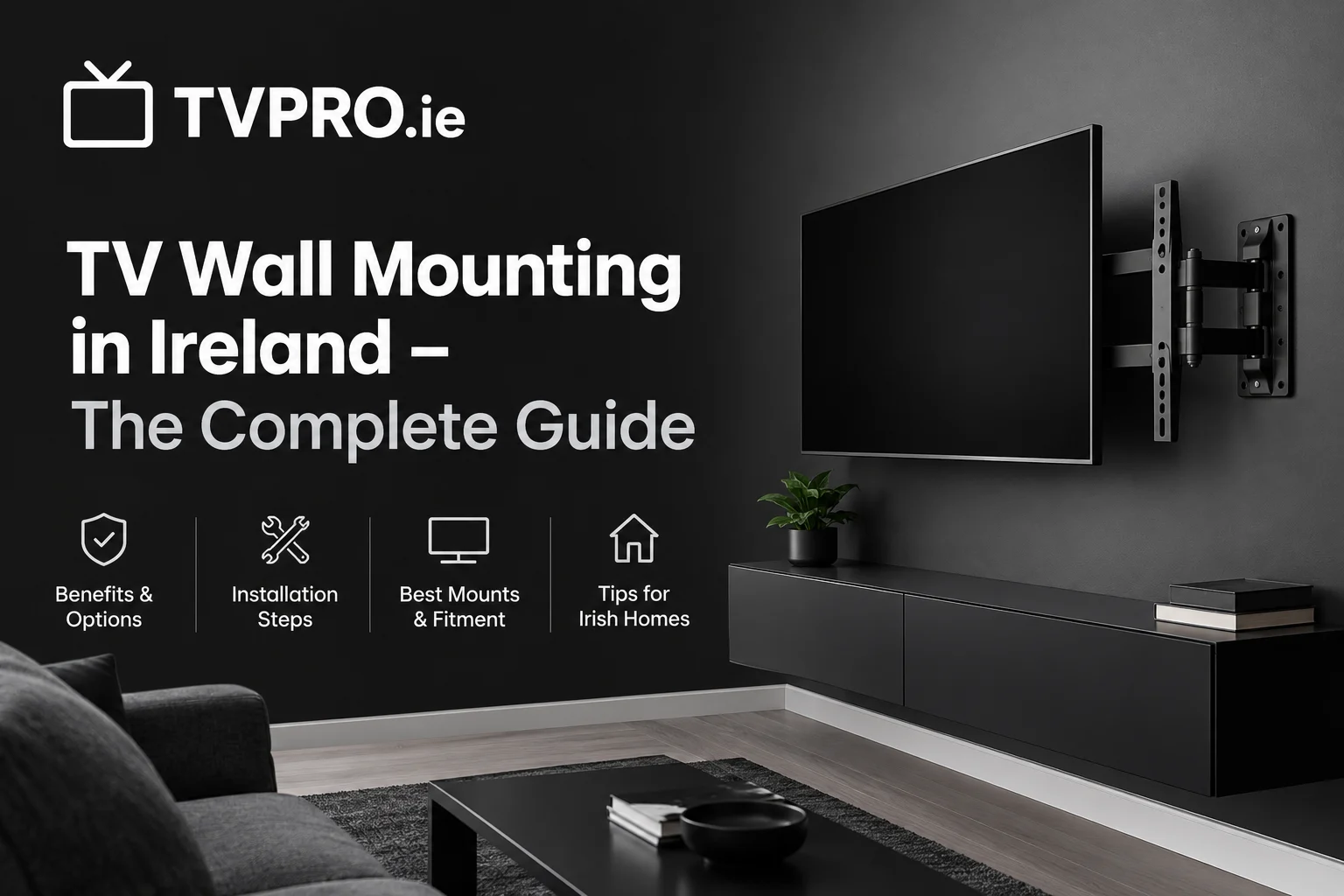
A wall-mounted TV frees up floor space, looks cleaner and puts the screen where it suits your room. It also gets the set away from small hands and stray football passes.
Getting it right depends on a few decisions: the bracket, the height, the type of wall and the cables. This guide walks through each one, with Irish homes in mind. That means block walls, dry-lined plasterboard, chimney breasts and compact apartments.
Why Wall Mount a TV?
- Space: no TV unit means more floor area, which matters in smaller living rooms and bedrooms.
- Viewing comfort: you choose the height and angle instead of working around a stand.
- Safety: a properly fixed TV can’t be pulled over by a child, a pet or a snagged cable.
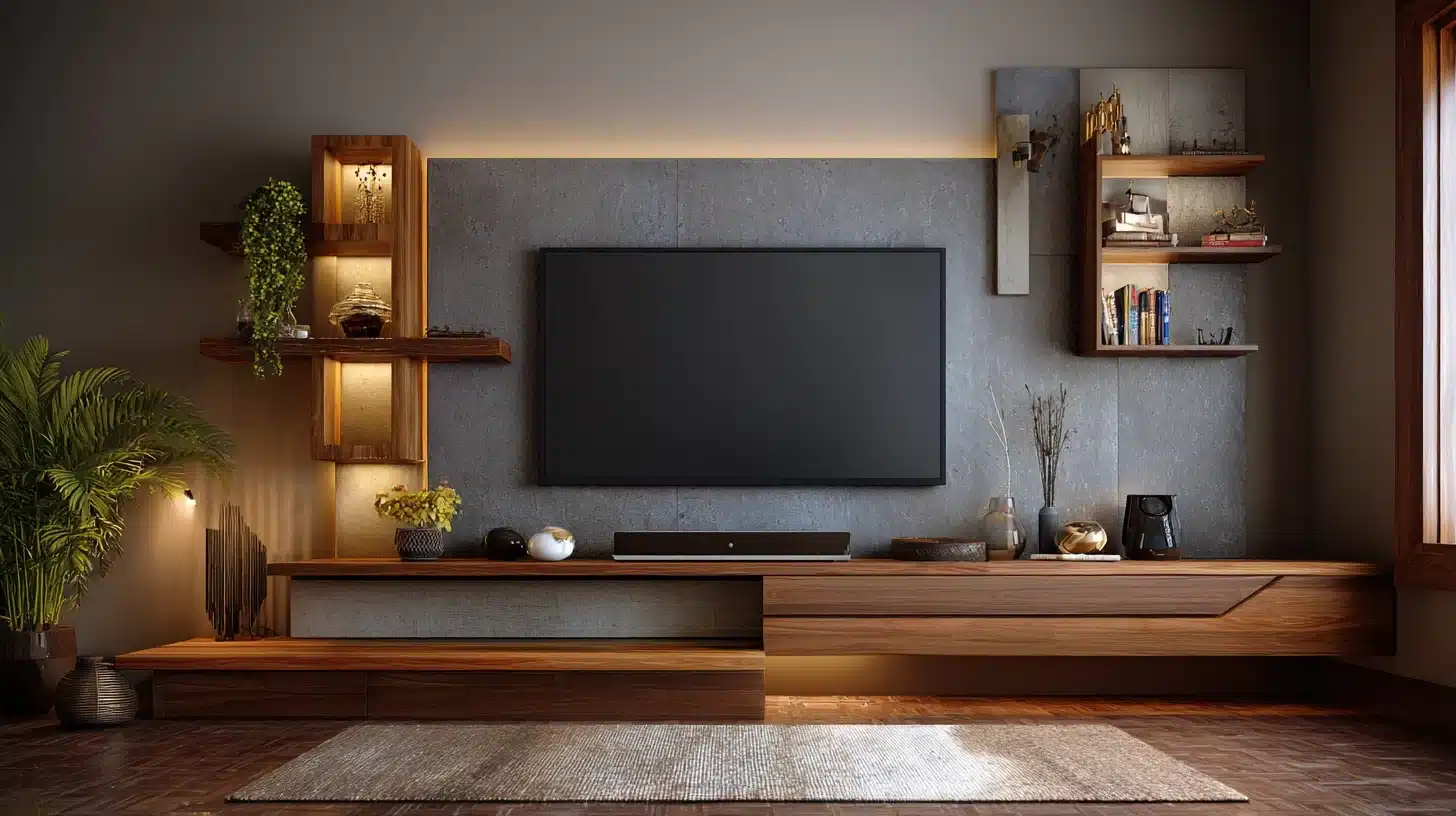
- Appearance: a slim screen on the wall with tidy cabling looks far better than a cluttered stand.
- Flexibility: swivel brackets let one TV serve a living area and dining space.
Types of TV Wall Brackets
Fixed (flat) brackets hold the TV close to the wall with no movement. They’re the slimmest and cheapest option, and a good fit when you’ll always watch from straight on.
Tilting brackets angle the screen up or down. They’re useful when the TV sits higher than ideal, for example above a fireplace, or when windows cause glare.
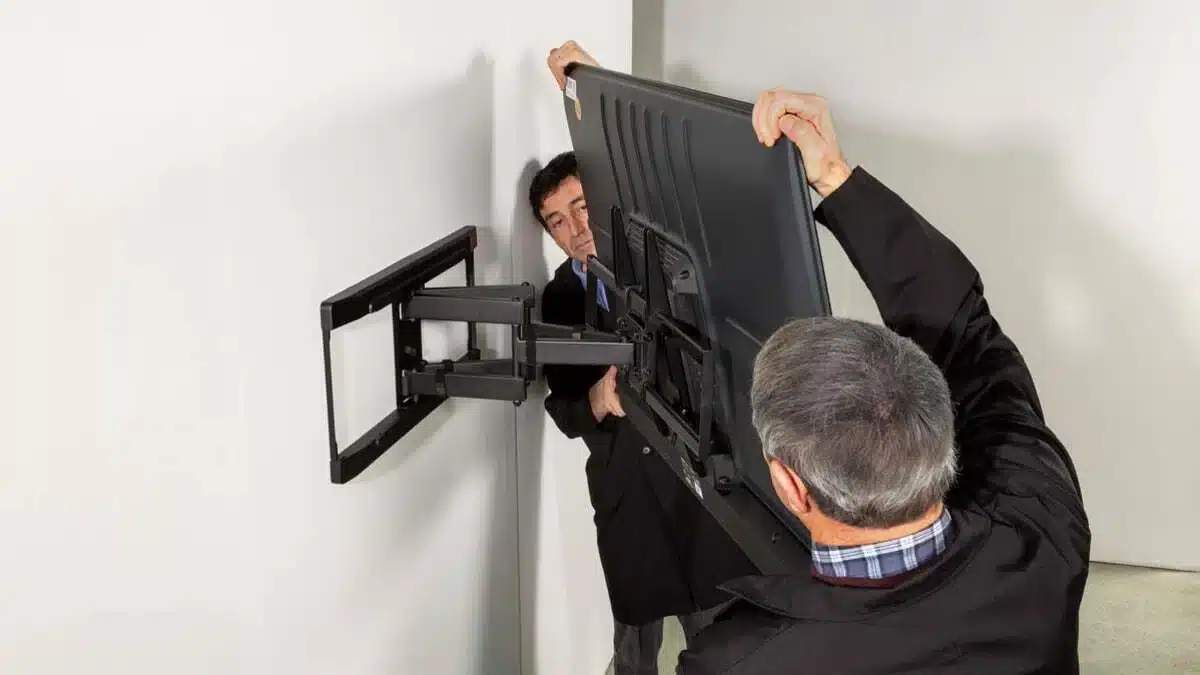
Full-motion (articulating) brackets extend, swivel and tilt. They suit corner placement, open-plan rooms and TVs viewed from several spots, but they’re heavier and need a solid fixing.
Specialist options include ceiling mounts, pop-down mounts and recessed brackets. These need a closer look at the site before you commit.
Not sure which fits? Browse our TV brackets and mounts or ask the team.
Check Your TV’s VESA Pattern and Weight
The holes on the back of your TV follow a VESA standard, such as 200×200 or 400×400 (in millimetres). Your bracket must support that pattern.
Check two things before buying:
- VESA pattern: listed in the manual or the spec sheet.
- Weight and size range: choose a bracket rated comfortably above your TV’s weight, not just matching it.
Don’t forget soundbars, streaming boxes and games consoles if they’ll sit on or beside the mount.
What Height Should You Mount a TV?
The general rule is to put the centre of the screen at eye level when you’re seated. For most living rooms that means the middle of the screen sits at roughly 100–110 cm from the floor. Adjust for your sofa height and viewing distance.
A common mistake is mounting too high, which strains the neck over a long film. This happens a lot above Irish fireplaces, where the chimney breast makes the high position tempting. If you must go high, use a tilting bracket and think about whether the viewing angle will actually be comfortable.
Know Your Wall Before You Drill
Walls in Irish homes vary a lot, and the wall type decides which fixings are safe.
Solid block or concrete is the strongest base. It needs masonry drilling and suitable heavy-duty anchors.
Dry-lined plasterboard on a block wall looks like a hollow wall but has masonry behind it. Fixings often need to pass through the board into the block, which usually means longer fixings.
Timber or metal stud partitions are common in newer builds and apartments. You need to locate the studs, because plasterboard alone won’t hold a TV safely. Where studs don’t line up with the bracket, a mounting board or specialist anchors may be needed.
Brick, stone or older plaster can be unpredictable. Test a small area first, or ask a professional to assess it.
Before drilling anywhere, check for hidden electrical cables and pipes. A cable and pipe detector costs little compared with the damage a bad hole can cause.
DIY or Professional TV Wall Mounting?
DIY can work if you have the tools, the wall is solid and the TV is small to medium. Plan for one to two hours and a second person to help lift.
Consider a professional if:
- the wall is plasterboard or stud
- the TV is large or heavy (65″ and above)
- you want cables hidden inside the wall
- the TV is going above a fireplace
- you’re renting and want a clean, minimal-damage finish
- you simply want it done without the risk
A professional will check the wall, fit the right anchors, level the bracket and tidy the cabling. See what our TV wall mounting service includes, or contact TVPro for a quote.
How to Hide TV Cables
There are three tidy options:
- Cable trunking: a slim cover running down the wall. It’s the simplest and cheapest, and it works on any wall.
- In-wall cable routing: low-voltage cables (HDMI, aerial) are concealed within the wall, which gives the cleanest look.
- A new socket behind the TV: this removes the power lead entirely. Any new mains wiring should be done by a registered electrician, not by a DIY extension through the wall.
Keep power and signal leads reasonably separated, and leave some slack at the TV so you can connect and disconnect it later.
Mounting a TV Above a Fireplace
It’s popular in Irish homes, but check first:
- Heat: avoid mounting above a working open fire or stove. Heat and soot can damage the screen.
- Height: the position is usually higher than ideal. A tilting or pull-down bracket helps.
- Wall strength: chimney breasts vary, and the surface may be stone, brick or board. Don’t assume.
Wall Mounting a TV in an Apartment or Rental
Check your lease or ask your landlord before drilling. Where mounting is allowed, plan the position carefully, because every extra hole is a mark you may have to repair. Stud walls are common in apartments, so confirm what’s behind the surface first.
How Much Does TV Wall Mounting Cost in Ireland?
Cost depends on:
- TV size and weight
- bracket type (full-motion costs more than fixed)
- wall type
- cable concealment and any electrical work
- whether you supply the bracket
- extras such as soundbar mounting or removing an old bracket
Ask any installer whether the price includes the bracket, fixings, cable tidying and a final check.
Step-by-Step: How a Professional Mounts a TV
- Agree the viewing position and bracket type.
- Check the wall for pipes and cables, and identify the wall construction.
- Mark and level the fixing points.
- Drill and fit the correct anchors.
- Secure the bracket plate.
- Attach the brackets to the TV and lift it into place.
- Connect and tidy the cables.
- Test the picture and the connected devices.
Common TV Mounting Mistakes to Avoid
- Mounting too high
- Using fixings that don’t suit the wall
- Buying a bracket without checking the VESA pattern
- Skipping the pipe and cable check
- Leaving no ventilation or cable slack behind the TV
- Relying on a plasterboard-only fixing
Where TVPro Provides TV Wall Mounting
TVPro installs TVs across Local pages include Dublin Cork and other area Not sure whether we cover you? Get in touch.
Frequently Asked Questions
What is the best height to mount a TV?
Place the centre of the screen at seated eye level, usually about 100–110 cm from the floor in a living room. Mounting higher can strain the neck, so use a tilting bracket if the TV must go above eye level.
Can I wall mount a TV on a plasterboard wall in Ireland?
Yes, but fix into studs, or into the masonry behind dry-lined board, using suitable fixings. Plasterboard alone can’t safely carry a TV. Checking the wall first prevents falls and damage.
Is it safe to wall mount a 65-inch TV?
Yes, if the bracket is rated above the TV’s weight and fixed to a suitable wall. Because of the weight, many people choose professional installation for 65″ and larger screens.
Do I need a professional to mount my TV?
Not always. DIY suits small to medium TVs on solid walls. Professional installation is better for plasterboard or stud walls, large TVs, fireplaces and hidden cabling.
What type of TV bracket should I choose?
Choose fixed for a slim, flat look, tilting to reduce glare or compensate for a high position, and full-motion if you need to swivel the screen or view from several places.
How do I find my TV’s VESA size?
Check the manual or the manufacturer’s spec sheet for a pattern like 200×200 or 400×400. You can also measure the distance between the mounting holes on the back, in millimetres.
How long does TV wall mounting take?
A standard installation usually takes one to two hours. Concealed cables, difficult walls or large TVs can add time.
Can I mount a TV above a fireplace?
Often yes, but avoid mounting above a working fire or stove because of heat. Check the wall strength and consider a tilting bracket, as the position is usually high.
How do I hide the cables on a wall-mounted TV?
Use trunking for a simple option or route low-voltage cables inside the wall. A power socket behind the TV removes the visible lead, but a registered electrician should fit it.
How much does TV wall mounting cost in Ireland?
Prices depend on TV size, bracket type, wall type and cable work. Ask for a quote that states what’s included.
Can I wall mount a TV in a rented property?
Usually only with the landlord’s permission. Get it in writing first, and plan the position carefully to limit the holes left behind.
continue reading
Related Posts
When you are wall-mounting any expensive and modern TV, it
A flat TV wall mount is one of the most
Homeowners looking to optimize their living spaces while still having