
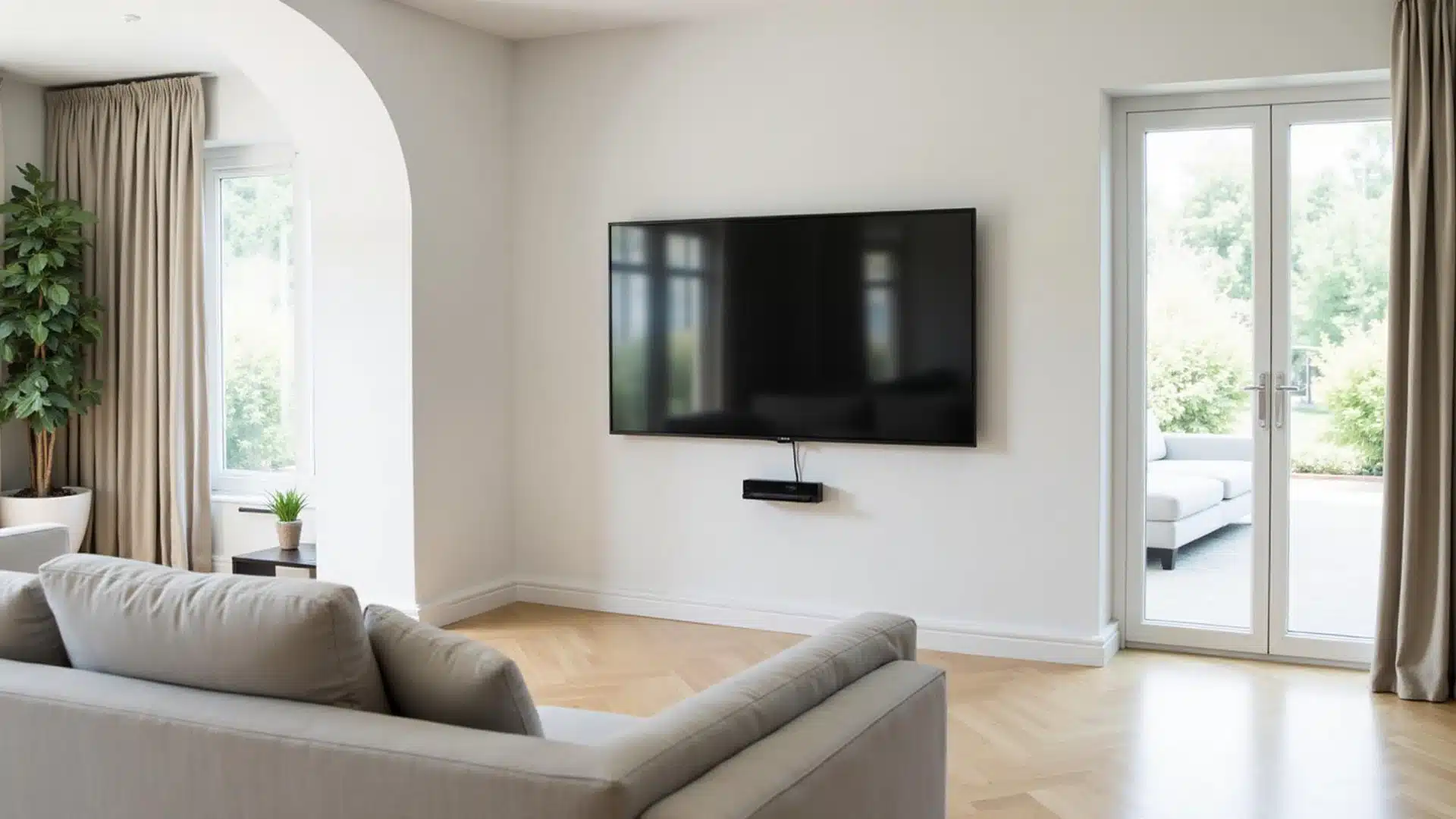
Wall-mounting a modern flat-screen television definitely transforms the living room, and it gives it a really clean and minimalist contemporary feel. But at the same time, nothing ruins the look of a wall-mounted TV faster than a cluster of power leads. When they are dangling down the wall they definitely look really bad and nobody wants that for sure.
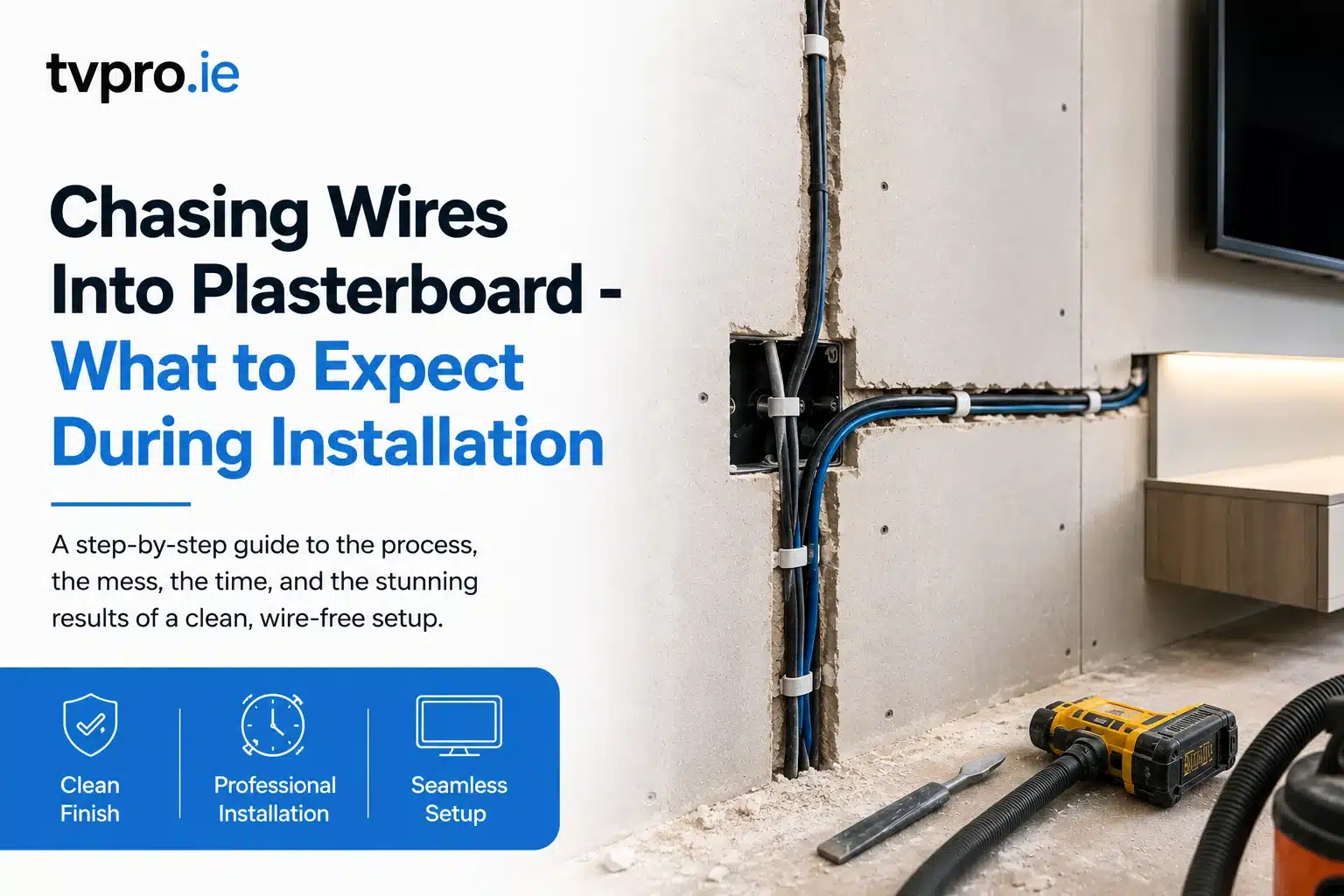
To get a seamless finish it is extremely important to conceal those cables inside the wall. When you’re dealing with drylined or stud walls, chasing wires into plasterboard is definitely the most effective way that you can use to hide the cables without any sort of structural disruption.
Below we are going to tell you how you can easily hide these cables and what happens when a professional cable chasing installation is being done, how the process works, and how exactly you must prepare your home.
What Does “Chasing” Into Plasterboard Mean?
In traditional masonry or brick walls, chasing means cutting physical grooves into the brickwork or concrete to lay a conduit, and also plastering over the channel.
With plasterboard, the process is cleaner and it is also less invasive. Plasterboard walls usually fall into two different categories that we are going to talk about below
- The first one is the stud walls and these are hollow walls that are made of a timber or metal frame clad with the plasterboard sheets.
- Then come the dot and dab walls. These are plasterboard sheets that are fixed onto solid brick or blockwork directly by using adhesive dabs. These leave a small gap between the board and the brick.
For the hollow stud walls, the cable concealment includes fishing cables through the empty cavity that is right behind the board. For the dot-and-dab walls, the installers route the wires through the narrow gap behind the plasterboard or also create a shallow channel into the plasterboard skin itself directly.
For hollow stud walls, cable concealment involves fishing cables through the empty cavity behind the board. For dot-and-dab walls, installers route wires through the narrow gap behind the plasterboard or create a shallow channel directly into the plasterboard skin itself.
Step-by-Step: The Installation Process
When you are well aware of what exactly happens during the process, it is going to relieve your anxiety about the damage or mess. We are going to give you a step-by-step breakdown of how professional cable chasing service exactly works
- The first step is the pre-installation assessment and cable mapping which is extremely crucial. The installer is going to conduct a thorough site survey to find the location of electrical wiring plumbing pipes and the structural studs by using scanners. They measure the right height where the TV is going to hang and they’re going to determine where the media devices are going to sit like your PlayStation or the sound bar.
- Then comes the next step which is to cut excess points. They are going to create entry and exit points that are concealed behind the equipment rather than ripping open the entire wall. There are two precise openings that are cut using a plasterboard saw or a hole saw.
- The next step is routing the wires through the cavity. Finding stud insulation and wall ties is the next step which is done using specialised cable rods or draw wires, the installers are going to route the required cables through the cavity from the upper opening to the lower opening. If the horizontal timbers or insulation block the path inside the stud wall there is a small cut is made and neatly passed through.
- Then comes the step of installing wall outlets or the brush plates. The professionals ensure a clean finish to prevent the cables from snagging against the edges of the plasterboard. The installers are going to fit the brush pass-through plates or dedicated media face plates over the cutouts. This is going to leave a really clean and professional finish on the surface of the wall.
- The last step is the hardware fitting and cable verification. The TV bracket is then securely anchored to the wall studs or using heavy-duty cavity anchors. The TV is mounted and the cables are concealed and then plugged into their ports and the setup is powered to test the quality of the signals.
What Level of Mess Should You Expect?
An extremely common question that homeowners often ask is whether their living room is going to be covered in dust or not.
Working with solid brick walls is a little messy but when you’re working with plasterboard surfaces it is significantly less messy and there is less dust. But cutting the gypsum board definitely generates white powder there are some precautions that the professional installers must take
- One thing that they have to do is dust extraction by using specific tools or vacuums that are held directly underneath the cutting tool as the plasterboard is cut out.
- The next step is using the protective sheets that are laid over the furniture and also the floor coverings in the immediate area.
- The access holes are hidden right behind the TV and media furniture. Some major plastering or repainting is rarely needed after a standard installation.
Important Considerations Before You Start
There are a few things that you have to consider before you really start
1. Future-Proofing Your Cables
The first thing that you have to do is install more cables than you actually need or use some high-specification cables. This is going to ensure the wall setup supports future gaming consoles or media players without needing you to reopen the wall down the line. Installing a flexible pipe inside the wall which is known as a conduit is going to allow you to pull new cables through very easily in the future.
2. Electrical Safety & Mains Power
Running a standard TV power lead right behind the wall is fine in many cases, but if you have to have a proper point installed directly behind the TV it should comply with the wiring regulations. Means cable installation should always be handled by or coordinated with a professional electrician to make sure there is complete safety compliance.
Bottom Line
When you understand what exactly to expect during the installation process you can easily prepare the space and you can also look forward to our release-leak and floating TV display without having to see a single wire.
With that being said if you’re looking for professional installers that can get the job done for you without making anything look messy then you must get in touch with us at TVPro.IE.
continue reading
Related Posts

One of the main focal points of a living room
When you invest your money in a high-definition TV, it
If you want to have a clean minimalist and extremely