
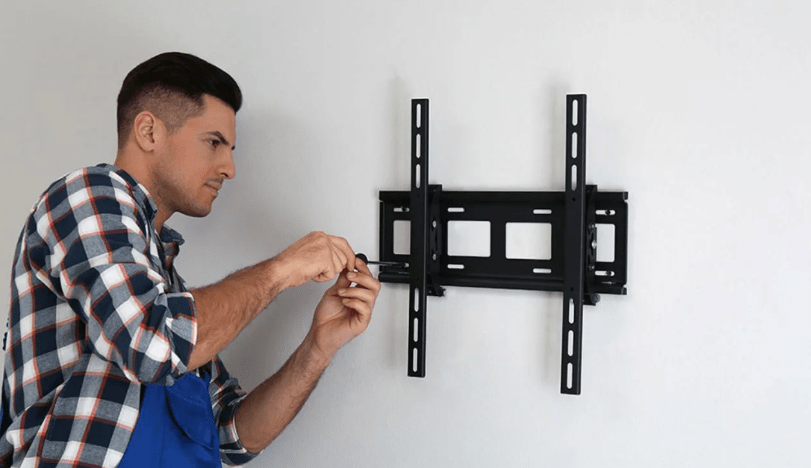
A flat TV wall mount can completely change the way your room looks and feels. Instead of placing your TV on a bulky stand, mounting it on the wall creates a clean, modern setup and frees up valuable space. It also improves your viewing experience when done correctly.
Many people rush into buying a wall mount without understanding the different types, compatibility, or installation process. That’s where problems start wrong height, unstable fitting, visible cables, or even damage to the wall.
This guide will walk you through everything step by step. You will learn how to choose the right wall mount, how to install it safely, what mistakes to avoid, and how to get the best viewing angle. The goal is simple: help you make a setup that looks professional and works perfectly.
What is a Flat TV Wall Mount and How Does It Work?
A flat TV wall mount is a strong metal bracket that attaches your television securely to a wall. Modern TVs are designed with mounting holes at the back, which follow a standard measurement system called VESA. The wall mount connects to these holes and holds the TV firmly in place.
The mount itself is fixed to the wall using screws and anchors. Once installed properly, it can support the full weight of your TV without any movement or risk. Depending on the type you choose, the mount may allow you to tilt or move the TV for better viewing.
This setup is not just about hanging a TV it’s about creating a safe, stable, and visually appealing environment.
Why You Should Use a Flat TV Wall Mount
Creates More Space in Your Room
One of the biggest benefits of wall mounting is the space it saves. A TV stand or cabinet takes up floor space, especially in smaller rooms. By mounting your TV on the wall, you can use that space for other furniture or keep it open for a cleaner look.
Improves Viewing Comfort
When your TV is placed on a stand, it may not always be at the right height. You might have to look up or down, which can cause discomfort over time. A wall mount allows you to position the TV exactly at eye level, making it easier to watch for long periods.
Gives a Modern and Clean Look
A wall-mounted TV instantly makes your room look more organized and stylish. It removes clutter and creates a sleek design that fits well in modern homes.
Keeps Your TV Safer
If you have kids or pets, a TV on a stand can be risky. It can fall if pushed or pulled. A properly mounted TV stays secure and out of reach, reducing the chance of accidents.
Helps Manage Cables Better
With wall mounting, you can hide or organize cables more easily. This removes the mess of wires hanging behind your TV and gives a polished finish.
Types of Flat TV Wall Mounts Explained in Detail
Choosing the right type of mount is important because it affects both functionality and comfort.
Fixed Wall Mount (Low Profile)
A fixed mount holds your TV flat against the wall without any movement. It is the simplest and most common option.
This type is ideal if you always watch TV from the same position. It gives a very slim and neat appearance because the TV sits close to the wall.
However, since it doesn’t move, adjusting cables or ports can be difficult after installation.
Tilting Wall Mount
A tilting mount allows you to angle the TV slightly up or down. This is useful if your TV is mounted higher than eye level, such as above a fireplace or in a bedroom.
The tilt helps reduce glare from lights or windows and improves the viewing angle. It offers more flexibility than a fixed mount but still keeps a simple design.
Full Motion (Articulating) Mount
A full-motion mount gives you complete flexibility. You can pull the TV away from the wall, tilt it, and move it side to side.
This type is perfect for large rooms or spaces where people watch TV from different angles. For example, if you have an open living area, you can adjust the TV based on where you are sitting.
Although it is more expensive and slightly bulky, it offers the best viewing experience.
Ceiling Mount
Ceiling mounts are less common but useful in certain situations. They are often used in offices, shops, or places where wall mounting is not possible.
How to Choose the Right Flat TV Wall Mount
Check TV Size and Weight Carefully
Every wall mount is designed to support a specific size and weight. Always check your TV’s specifications before buying.
Using a mount that cannot handle your TV’s weight is risky and can lead to serious damage.
Understand VESA Compatibility
VESA refers to the spacing between the mounting holes at the back of your TV. You need to make sure the wall mount matches this pattern.
Most mounts support multiple VESA sizes, but it’s always better to double-check.
Consider Your Wall Type
The strength of your wall plays a big role in installation.
- Concrete and brick walls are strong and ideal
- Drywall needs proper support from studs
- Weak walls should be avoided
Mounting without proper support can cause the TV to fall.
Think About Your Viewing Position
Ask yourself where you usually sit while watching TV. If your position changes often, a full-motion mount is a better choice. If not, a fixed or tilting mount will work fine.
Step-by-Step Guide to Installing a Flat TV Wall Mount
Step 1: Choose the Right Location
Pick a wall that is strong and offers a comfortable viewing angle. Avoid placing the TV where direct sunlight hits the screen.
Step 2: Find Wall Studs
If you are working with drywall, locating studs is very important. Studs provide the strength needed to hold the TV securely.
Step 3: Mark the Mounting Points
Hold the mount against the wall and mark where you need to drill. Use a level tool to make sure the marks are straight.
Step 4: Drill the Holes
Drill carefully at the marked points. Make sure the holes are aligned properly.
Step 5: Attach the Wall Mount
Secure the mount to the wall using screws and anchors. Tighten everything properly.
Step 6: Fix Brackets to the TV
Attach the mounting brackets to the back of your TV using the provided screws.
Step 7: Mount the TV
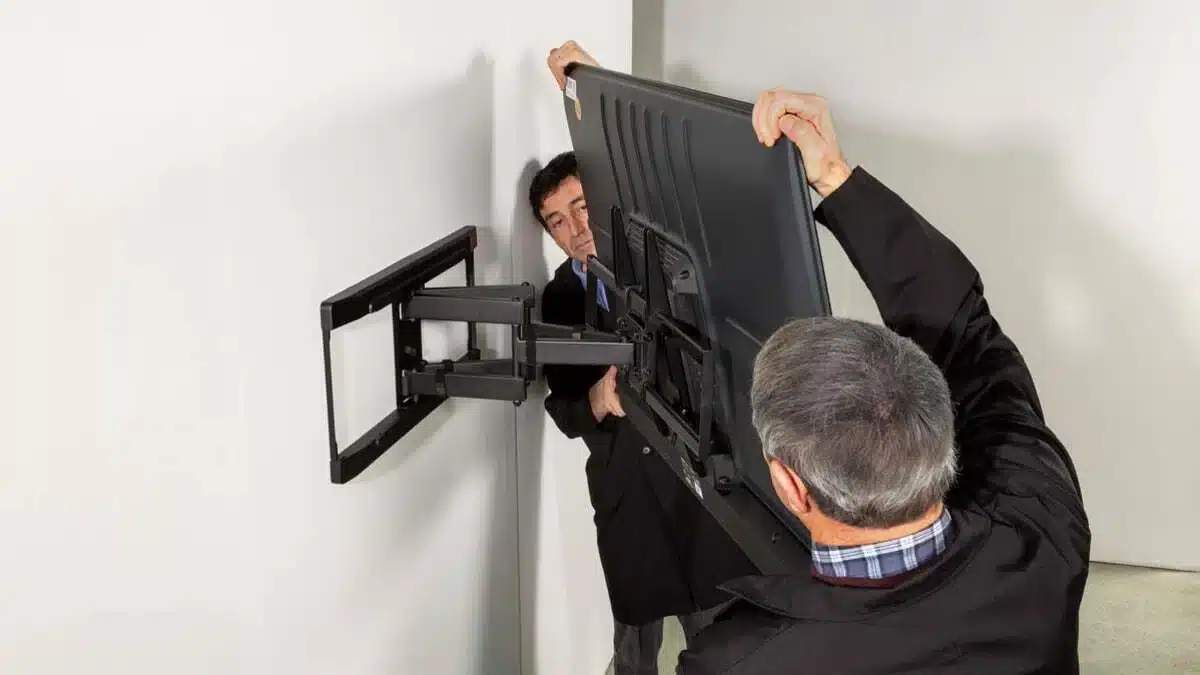
Lift the TV carefully and hook it onto the wall mount. It’s better to have someone help you with this step.
Step 8: Check Stability
Once mounted, gently test the TV to ensure it is secure.
Best Height for Mounting Your TV
The correct height makes a big difference in comfort.
Ideally, the center of the TV screen should be at your eye level when you are seated. If the TV is too high, it can strain your neck. If it’s too low, it may not feel natural to watch.
In bedrooms, TVs are usually mounted slightly higher because people often watch while lying down.
Common Mistakes You Should Avoid
Many people make small mistakes that affect the overall setup.
Mounting the TV too high is one of the most common issues. It may look stylish at first, but it becomes uncomfortable over time.
Another mistake is ignoring the wall type. Installing on weak walls without proper support can lead to serious accidents.
Some people also skip using a level tool, which results in a tilted TV. Even a slight tilt can ruin the look.
Poor cable management is another problem. Hanging wires makes the setup look messy.
Cable Management Tips for a Clean Setup
A clean setup is not just about the TV it’s also about the cables.
You can use cable covers to hide wires along the wall. Another option is to run cables inside the wall for a completely clean look.
Cable clips can help keep wires organized and prevent tangling.
Safety Tips You Should Never Ignore
Always make sure that all screws are tightened properly. Loose screws can weaken the mount over time.
Avoid installing large TVs alone. It’s safer to have someone assist you.
Keep children away during installation to prevent accidents.
Using a high-quality mount is also important. Cheap mounts may not provide the same level of safety.
Flat TV Wall Mount for Different Rooms
Living Room Setup
In living rooms, flexibility is important. A full-motion mount works best because it allows you to adjust the TV based on seating.
Bedroom Setup
In bedrooms, a tilting mount is more practical. It allows you to adjust the angle while lying down.
Office Setup
For offices, a fixed mount is usually enough. It keeps the setup simple and professional.
Cost of Flat TV Wall Mount and Installation
Wall mounts come in different price ranges depending on type and quality.
Basic fixed mounts are more affordable, while full-motion mounts cost more due to added features.
If you hire a professional, installation charges will be added. However, it can be worth it for a perfect and safe setup.
DIY vs Professional Installation
Doing it yourself can save money if you have the right tools and basic knowledge.
However, professional installation is a better option if your TV is large or your wall is complex. Professionals ensure proper alignment and safety.
Maintenance and Long-Term Care
Even after installation, some maintenance is needed.
Check screws occasionally to make sure they remain tight. Dust the area behind the TV to keep it clean.
Avoid putting extra weight or pressure on the mounted TV.
Conclusion
A flat TV wall mount is more than just a way to hang your TV. It improves your space, enhances comfort, and adds a modern touch to your home.
The key is to choose the right mount, install it correctly, and avoid common mistakes. When done properly, it becomes a long-term solution that makes your TV viewing experience much better.
FAQs
Can I mount a TV without drilling?
Most wall mounts require drilling for proper support. Alternatives exist, but they are not as secure.
How do I know if my wall can hold a TV?
Check the wall type and use studs or anchors for support. Strong walls like concrete are ideal.
What is the best type of wall mount?
It depends on your needs. Fixed mounts are simple, while full-motion mounts offer flexibility.
Can I install a wall mount myself?
Yes, but only if you have the right tools and follow proper steps.
continue reading
Related Posts
When you are wall-mounting any expensive and modern TV, it
A flat TV wall mount is one of the most
Homeowners looking to optimize their living spaces while still having